
Stroke Rehabilitation at Home in Malta: What Families Should Do Next
A stroke changes things quickly. One day a parent, partner or sibling is going about their life, and the next, it feels like everything has changed. Suddenly you’re in and out of clinics trying to take in unfamiliar information about brain scans, blood pressure and rehabilitation.
If you are reading this in those early days, you are not alone. In Malta, around three people experience a stroke every day, making it one of the leading causes of long-term disability in the country. The good news is that there is more you can do to support recovery than you might think.
Understanding what has happened after a stroke
A stroke happens when blood flow to part of the brain is interrupted, either by a clot or a bleed. The effects depend on which part of the brain was affected and how quickly treatment was given. Some people experience weakness on one side of the body, others have changes in speech, swallowing, memory or balance. Many experience a combination.
The early days are often the most uncertain. Doctors may be cautious about predicting recovery because the brain is still settling, and improvement can continue for many months, sometimes years, after the event.
What to expect in the first weeks
Recovery after a stroke depends heavily on what happens in the first weeks and months. This is when the brain is most able to form new connections, a process known as neuroplasticity. Starting rehabilitation early, and keeping it consistent, makes a real difference to long-term outcomes.
A typical stroke rehabilitation team might include a physiotherapist to work on movement and balance, an occupational therapist to support daily activities like dressing and eating, a speech and language pathologist for communication and swallowing, and a neuropsychologist for memory, attention and emotional changes. Many patients also benefit from nursing support and trained carers during the transition home.
What families in Malta can do to help patients
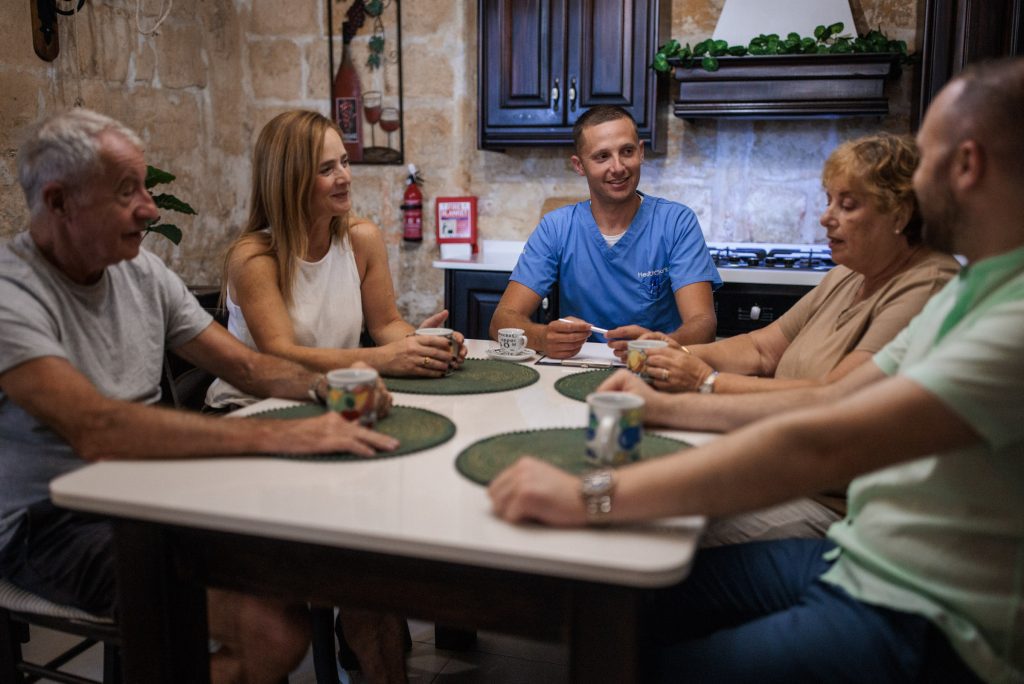
Families often feel helpless in the first weeks, but there are practical things that help:
Ask the hospital team about a discharge plan early, including what equipment, support or modifications might be needed at home. Public rehabilitation services in Malta are available, but many families also choose private home-based therapy to complement them, particularly for more intensive or flexible support. Keep a simple notebook with names of clinicians, medications and appointments, since information comes quickly during hospital stays. Encourage gentle activity and conversation, but also allow plenty of rest, since fatigue is one of the most common and underestimated effects of stroke.
Most importantly, look after yourselves. Stroke recovery is a long road, and families who pace themselves tend to provide better, more sustainable support.
Chances of recovery after a stroke
Every stroke is different, but improvement is the rule rather than the exception, especially with structured rehabilitation. Many people regain significant independence, and even those with lasting changes often find ways to adapt and live meaningful lives.
Stroke rehabilitation at home in Malta
Once your loved one returns home, continued therapy is often what makes the difference between a good and a great recovery. Healthmark at Home provides stroke rehabilitation at home across Malta and Gozo, with physiotherapists, occupational therapists, speech and language pathologists and nurses working together as a coordinated team in your own home.
Healthmark is also hosting a public talk, Beyond the Stroke: Understanding the Functional Impact on Daily Life and Quality of Life, where families can learn more about recovery and how to support a loved one after stroke.
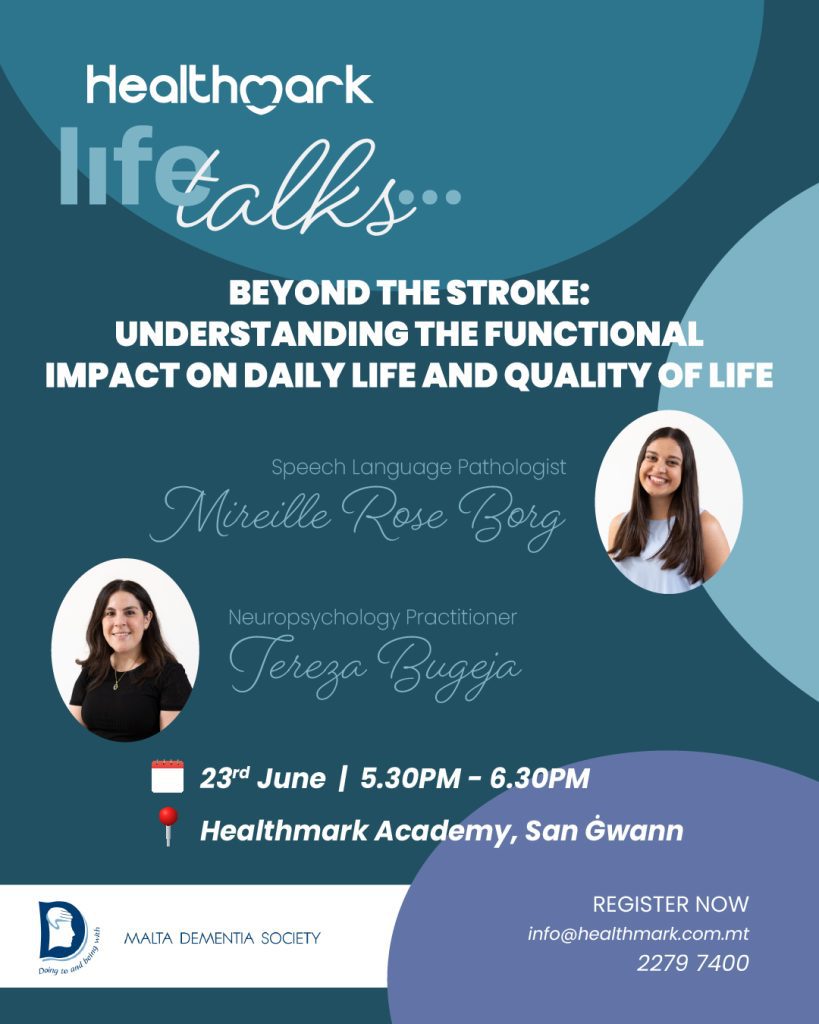
Register here: www.healthmark.com.mt/lifetalks
Frequently Asked Questions About Post-Stroke Recovery
- How common is stroke in Malta?
Around three people in Malta experience a stroke every day, which makes it one of the most common causes of long-term disability and hospital admission in the country.
- How long does stroke recovery take?
Recovery varies from person to person. The most rapid improvement usually happens in the first three to six months, but progress can continue for a year or more, and sometimes longer. Consistent rehabilitation makes a meaningful difference at every stage.
- Can someone fully recover from a stroke?
Many people make a very good recovery, particularly with early and structured rehabilitation. Some are left with lasting changes, but even then, the goal of rehabilitation is to help them adapt, regain independence and live a full life.
- What kind of therapy is needed after a stroke?
Most stroke survivors benefit from a combination of physiotherapy (for movement and balance), occupational therapy (for daily activities), and speech and language therapy (for communication and swallowing). Some also need support from a neuropsychologist for memory and emotional changes, and nursing care during the early weeks at home.
- Is home-based stroke rehabilitation available in Malta?
Yes. Healthmark at Home offers multidisciplinary stroke rehabilitation across Malta and Gozo, with a team of therapists and nurses who visit patients in their own homes.
- What should families do first after a loved one has a stroke?
Stay close, ask the hospital team about the discharge plan early, take notes, and start thinking about rehabilitation as soon as possible. Early support, both medical and emotional, makes a real difference to recovery.
To arrange home-based stroke rehabilitation, call 2279 7400 or visit healthmark.com.mt.